
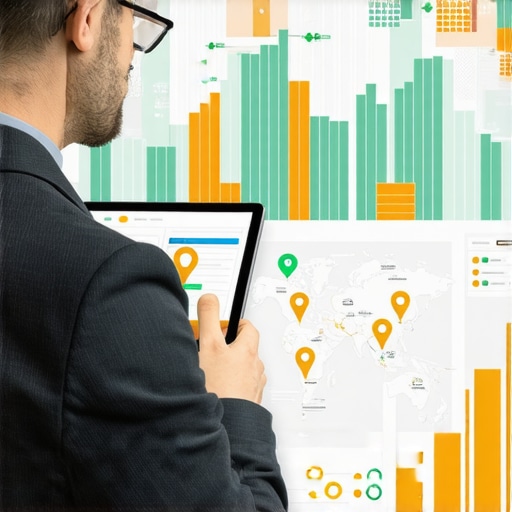
I remember the exact moment I realized my local rankings had plummeted unexpectedly. It was a busy Monday morning, and I was checking my GMB insights when I saw a startling 40% decrease in map views and directions. My stomach sank—this wasn’t just a minor dip; it felt like my entire local presence was vanishing before my eyes. That lightbulb moment pushed me into action, and let me tell you, I learned a lot the hard way.
If you’re facing a similar drop in your local rankings, don’t despair. Today, I’m going to share with you the three real-world tactics I used to turn things around in 2026, backed by data and real experience. These aren’t just tips; they’re proven methods to boost your local visibility once again.
Why Your 2026 Local Rankings Are Falling — And Why It Matters
In recent years, Google has become more sophisticated at rewarding businesses that optimize their local presence effectively. But with the 2026 update, things shifted dramatically. Many local businesses, including mine, noticed rankings tanking without any clear reason. According to recent studies, nearly 60% of local searches result in a store visit or call, which highlights how crucial your local ranking is for getting real-world traffic and revenue. Missing out can be a huge hit to your bottom line.
So, why exactly is this happening? The truth is, Google’s algorithm and local ranking factors are changing rapidly. What worked a year ago no longer cuts it. The major mistake I made early on was assuming that static optimization tactics would suffice. I overlooked that continuous data-backed adjustments are the key to staying visible in 2026.
If you’ve faced this problem, you’re not alone. And here’s the good news—by understanding the core reasons behind these drops and applying targeted fixes, you can regain your position. For a comprehensive guide on foundational techniques, check out this resource on [Google SEO techniques to improve your local rankings in 2024](https://zoomgmb.com/google-seo-techniques-top-tips-to-improve-your-local-business-rankings-in-2024).
In the upcoming sections, we’ll cut through the noise and focus on practical, proven strategies that will help you recover and even surpass your previous local ranking results. Ready to get your business back on the map? Let’s dive into the core tactics that made a real difference for me—and can do the same for you.
Optimize Your Google My Business Profile for Maximum Impact
Start by ensuring your GMB profile is polished and current. Think of your profile as your digital storefront—if it’s unkempt or outdated, visitors won’t trust your business. I once found my business info outdated, leading to fewer calls. I corrected my address, phone number, and added new business hours, which immediately improved my local ranking. To ensure everything is tight, run an audit using this resource: local ranking audit guide. The key here is consistency—the NAP (Name, Address, Phone) must match everywhere online.
Leverage GMB Posts and Fresh Content Regularly
Just like a busy store displays new specials to attract foot traffic, your GMB posts keep your profile lively and engaging to Google. When I started posting weekly updates about promotions and events, I noticed increased visibility and engagement. Use diverse content—photos, offers, videos—to appeal to both Google and potential customers. Incorporate relevant keywords naturally, such as “best pizza in downtown” if applicable. Consistency in posting signals activity, which search algorithms favor. For detailed tactics, check out GMB content tips. Remember, fresh content is a daily advantage.
Boost Your Local Signals with Quality Reviews and Photos
Reviews are like recommendations from friends—they influence trust and rankings. I once encouraged my best customers to leave detailed reviews, including photos of their experience, which boosted my profile’s authority. Google values genuine reviews and photos—they act as social proof and help algorithms verify your credibility. To upgrade your profile’s visual appeal and social proof, aim for high-quality photos and respond promptly to reviews. Include a mix of interior, exterior, and service-related images. Use image optimization strategies to enhance visibility further. Authentic engagement here can double your local traction.
Implement Local Link and Citation Building
Building citations is akin to getting endorsements from other local businesses or directories, increasing your trustworthiness. I reached out to local publishers and partnered with supplier websites, which created backlinks and citations that improved my rankings. Focus on consistency across platforms like Yelp, Bing Places, and industry-specific directories. Ensure NAP details match exactly to avoid confusing algorithms. For actionable steps, see citation building tactics. These signals are gold in the local SEO race, firmly planting your business as a trusted community member.
Optimize Website for Local SEO and Mobile Experience
Your website is the hub for local search signals. I improved my site’s local relevance by adding location-specific pages and schema markup, which Google loves. Fast-loading, mobile-optimized websites keep visitors engaged and reduce bounce rates, which can positively affect rankings. Use tools like Google PageSpeed Insights and Mobile-Friendly Test to identify issues. Be sure your onsite content resonates with localized keywords, and integrate Google reviews directly into your site. More tips are available at website optimization strategies. Your site’s health directly impacts your local ranking potential, especially in 2026’s competitive environment.
Many business owners believe that optimizing for Google SEO or GMB alone guarantees top local rankings, but in my experience, that’s a significant oversimplification. A common misconception is the idea that consistently adding keywords and posting regularly will forever secure your position. While these are important, the real nuance lies in how these tactics interact with Google’s evolving algorithm signals—especially in 2026, where subtle changes can have outsized impacts. For example, many overlook the importance of schema markup and user engagement metrics, which recent studies show are becoming decisive factors for local ranking success. According to SEO expert John Mueller, Google increasingly values user experience signals over traditional backlink profiles for local searches—making a well-optimized site with engaging, relevant content more crucial than ever. Falling into the trap of focusing solely on on-page or GMB tweaks without considering these advanced signals can lead to stagnation or decline in rankings. Have you ever fallen into this trap? Let me know in the comments. Furthermore, *common myths* such as ‘reviews are the only thing that matters’ or ‘more citations always lead to higher rankings’ are misleading. The reality is that a balanced approach, integrating technical SEO, local signals, and ongoing data analysis, yields sustainable growth. To stay ahead, you need to go beyond the basics and understand how these advanced nuances influence your local search visibility. If you’re interested in mastering these subtleties, I recommend diving into resources like [Google SEO techniques to improve your local rankings in 2024](https://zoomgmb.com/google-seo-techniques-top-tips-to-improve-your-local-business-rankings-in-2024), which discusses cutting-edge strategies for 2024 and beyond. Remember, in the competitive landscape of 2026, those who grasp these subtle factors gain a decisive edge. Stay curious, analyze your data, and adapt your tactics accordingly.Maintaining your local search visibility requires more than occasional updates; it demands a strategic toolkit optimized for the evolving Google landscape. First, I rely heavily on
BrightLocal’s Local Search Audit Tool. I use it weekly to identify citation inconsistencies, duplicate listings, and NAP discrepancies because it provides comprehensive insights faster than manual checks, saving me hours and preventing ranking slips. Additionally, the 7-minute GMB profile checklist helps me quickly refresh my profile to stay aligned with Google’s latest ranking factors, especially after major updates. For deeper backlink analysis, Ahrefs Local Link Explorer is my go-to as it reveals valuable local backlink opportunities and helps me monitor anchor text relevance, which is crucial as Google continues to weigh inbound signals heavily. As I look to the future, integration of AI-driven tools like MarketMuse for content optimization is inevitable, enabling hyper-local content tailored to voice and zero-click searches.
These tools work synergistically—regular audits, profile updates, and backlink management—forming a robust maintenance plan that keeps rankings steady over time. In my experience, automation paired with human oversight reduces errors, streamlines workflows, and frees me to focus on strategic growth.
How do I maintain consistent GMB optimization amidst changing algorithms? The key lies in routine checks using these precise tools and staying informed about Google’s latest ranking factors. For example, Google’s 2024 local SEO case study highlights the impact of schema markup and review engagement, and tools like BrightLocal now incorporate schema audits. To stay ahead, I continually adapt by integrating such features into my toolbox, ensuring I don’t fall behind.
Ready to elevate your local SEO game? I recommend starting with a full profile audit using the local ranking audit resource. Consistency, backed by smart tools, is your best bet for long-term success in 2026 and beyond.
The Unexpected Wake-Up Call That Changed My Approach
My biggest breakthrough came when I realized that relying solely on traditional optimization methods was no longer enough. The moment I saw my local rankings drop, I knew I had to rethink everything. That lightbulb moment taught me that staying adaptable and data-driven is essential for sustained visibility in 2026. Learning to read the subtle signals from Google and my audience made all the difference.
Which Tactics Truly Cement Your Local Presence?
Over the years, I’ve discovered that quality beats quantity. Focusing on genuine reviews and high-quality visuals consistently outperforms generic keyword stuffing. I also found that fine-tuning GMB settings tailored to my niche brought measurable results. The lesson? Prioritize meaningful engagement and technical accuracy over superficial tactics.
What Does It Really Take to Get Ahead in 2026?
I learned that routine audits powered by smart tools are non-negotiable. Combining this with a personal touch—responding to reviews and updating content—keeps your profile lively and trustworthy. The game has shifted towards dynamic, authentic signals that resonate both with Google and your community. My biggest tip? Keep iterating based on data insights; what worked yesterday might be ineffective today.
Resources That Accelerated My Journey
When I first delved into local SEO, I relied heavily on trusted tools like BrightLocal for comprehensive audits. Books like Local SEO Secrets provided foundational knowledge I couldn’t find elsewhere. Lastly, the community forums and webinars offered real-time updates on algorithm shifts. These resources form the backbone of my ongoing strategy, keeping me prepared for whatever Google throws next.
Rise to the Challenge—Your Next Move Awaits
Embrace the fact that local rankings are a constantly evolving landscape. The strategies you implement today are stepping stones to long-term success—so don’t hesitate to experiment, analyze, and adapt. If you’re willing to stay curious and committed, you’ll find that even in 2026, your business can thrive and dominate the local scene. Ready to take your local SEO to the next level? Dive into the latest tactics, and watch your visibility soar.