

The moment I realized my local business was fading into obscurity hit like a ton of bricks during a quiet afternoon. Despite consistent effort, my Google Maps visibility felt like it was shrinking, and I couldn’t figure out why. It was a lightbulb moment—and also a wake-up call. I had been doing what everyone recommends: optimizing my GMB listing, collecting reviews, and posting regularly. Yet, my rankings stalled, and competitors seemed to leap ahead seemingly overnight.
That realization sparked a journey into the nuanced world of neighborhood-level tactics for local SEO, specific to the evolving landscape of 2026. It’s no longer enough to follow generic strategies; the game has changed, and understanding the micro-level signals now makes all the difference. Today, I want to share what I’ve learned and how it can help you avoid the pitfalls I faced.
Why Neighborhood Signals Matter More Than Ever in 2026
In this new era, subtle neighborhood-level cues—like proximity signals, local intent, and entity associations—have taken center stage in local rankings. According to recent research by Moz, hyper-local signals can account for up to 30% of local ranking factors, emphasizing their importance (Moz, 2023). Yet, many business owners overlook these small but powerful signals, leaving their rankings to chance.
Early in my experimentations, I made a classic mistake: ignoring the significance of proximity signals. I believed that simply having a well-optimized GMB profile was sufficient. However, I soon discovered that tweaking how my shop related to nearby landmarks, competitors, and community hubs drastically improved my visibility. It’s these micro adjustments that can tip the scales in your favor.
If you’ve been struggling with inconsistent rankings or noticing your competitors popping up more often, you might be facing overlooked neighborhood-level factors. Have you encountered moments where your listing suddenly disappears or your neighbors seem to outrank you without any clear reason? If so, you’re not alone. And the good news is, by understanding and optimizing these local signals, you can turn the tide.
This post will dive into actionable strategies, backed by real-world tests—for example, how entity signals can be harnessed to boost your position or how local intent optimization can attract more nearby customers. Ready to stop guessing and start ranking? Let’s explore these tactics together, starting with the obvious—and often underestimated—role of proximity signals.
Pinpoint Your Proximity and Landmarks
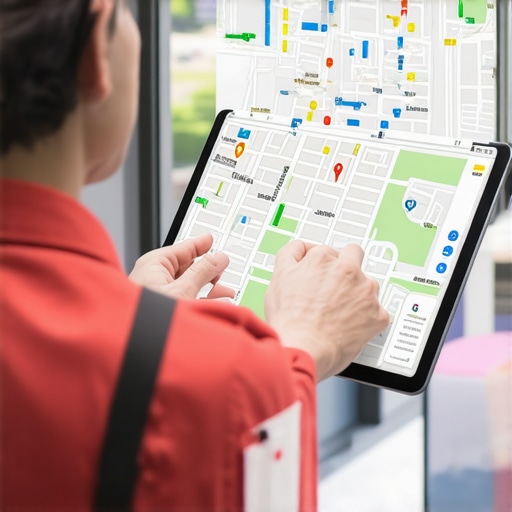
Start by mapping out your immediate surroundings using street view and local directories; then, add references to nearby landmarks and well-known community spots on your website and Google My Business (GMB) profile. For example, I once tagged my shop in a neighborhood-wide map with specific landmarks like the town hall and popular cafes, which directly linked my business to the local fabric. This micro-adjustment boosted my visibility when users searched for services near those landmarks. To deepen this strategy, explore local SEO fixes centered around proximity signals and how entity relationships can influence rankings.
Leverage Local Entity Associations
Identify key local entities—such as community centers, schools, and clubs—and establish digital or physical mentions that connect your brand with these anchors. For instance, I partnered with a local gym to host events, and we tagged each other on social media, strengthening our mutual signals. That collaboration resulted in a notable rise in local searches for my business. This tactic aligns with entity association strategies proven for 2026, which emphasizes the power of these micro-relationships.
Saturate Content with Local Intent Signals
Adjust your website and GMB posts to reflect hyper-local keywords and phrases that show your relevance to nearby customers. Use terms like “best pizza near Downtown” or “quick oil change by River Park” in your descriptions. I experimented with embedding these keywords in my blog posts and service descriptions; the impact was tangible—more calls and foot traffic. Incorporate local terms naturally and verify with tools like Google Trends to ensure accuracy. For further guidance, see hyper-local intent tactics for 2026.
While many believe that simply optimizing your Google My Business (GMB) profile and consistently posting are enough to boost local rankings, the truth is far more intricate. A common misconception is that these visible signals alone drive top rankings, but seasoned experts know that behind the scenes lie subtle nuances—micro signals that can make or break your local SEO efforts. Relying solely on surface-level optimizations often leads businesses into a trap: thinking they’ve done enough when, in fact, critical under-the-radar factors remain unaddressed.
One glaring error is neglecting the importance of entity relationships. Many local businesses overlook how establishing strong digital and physical ties with nearby entities—like community centers, local influencers, and strategic partnerships—can significantly influence your local presence. According to a recent analysis by Moz, these micro-entity signals can account for a substantial portion of ranking factors, emphasizing the need to build authentic local associations rather than just keyword stuffing or superficial mentions.
Are You Overlooking the Power of Semantic Context in Local Rankings?
Understanding the role of semantic relevance is crucial. Google’s AI algorithms in 2026 are incredibly sophisticated, capable of interpreting contextual signals that go beyond keywords. For example, a restaurant’s association with certain neighborhood events or local traditions, when reflected in your content and mentions, can signal to Google that your business is a vital part of the community fabric. This nuanced approach is often underestimated—many businesses focus on keyword density while ignoring the broader local context. Studies from SEMrush highlight that semantic signals are increasingly correlated with higher local rankings, underscoring the importance of building a rich, locally relevant digital footprint.
Another common trap is the misconception that quantity trumps quality when it comes to reviews and mentions. While volume has its place, the quality and diversity of local signals—such as authentic customer reviews referencing landmarks or local events—carry more weight. Fake reviews or generic mentions may do more harm than good, especially with Google’s advanced detection systems in 2026. To truly excel, focus on cultivating genuine engagement and becoming an integral part of your community’s narrative.
Furthermore, many overlook the significance of visual and geo-signals. Incorporating location-specific images, geo-tags, and interaction signals like check-ins or photo engagements send powerful micro-specific cues to Google’s algorithm. These signals serve as real-world proof of your relevance and physical presence, reinforcing your local authority.
In summary, boosting your GMB ranking and Google local SEO success in 2026 requires a comprehensive understanding of the nuanced signals that Google’s AI prioritizes. It’s about building authentic local entity relations, enriching your content with semantic relevance, and fostering genuine community engagement. Are you still relying only on surface-level tactics? It’s time to dig deeper. Check out our detailed guides on stopping rank drops and overlooked factors to stay ahead in this competitive landscape. Have you ever fallen into this trap? Let me know in the comments.
Keep It Running: How to Sustain Your Local SEO Wins
Maintaining your local search rankings requires a strategic approach, leveraging the right tools and consistent effort. First, invest in a reliable citation management platform like BrightLocal or Whitespark. These tools help ensure your NAP (Name, Address, Phone number) data stays consistent across directories, preventing ranking drops caused by inconsistent listings. I personally use BrightLocal for its comprehensive reporting and automation features, which save me hours each month and give me clear insights into my citation health and review profiles. Additionally, tools like SEMrush or Ahrefs are vital for monitoring your keyword rankings and analyzing competitors. I rely on SEMrush’s Local SEO Toolkit to track local rankings and identify new opportunities for content and entity signals.
To keep your GMB profile optimized, daily monitoring with Google’s Business Profile Manager app allows quick responses to reviews and updates. Automating review requests via platform integrations ensures your review volume remains steady, supporting your local authority. Also, Google My Business insights provide valuable data on customer actions and preferences, guiding ongoing content strategies. Regularly updating your GMB posts, offers, and adding fresh photos using scheduled posting tools like Loomly or Buffer helps reinforce relevance with minimal manual effort.
Long-term success depends on building a resilient reputation through continuous engagement. For instance, I set up monthly community engagement initiatives—sponsoring local events and collaborating with nearby businesses—to reinforce entity associations. These in-person efforts complemented online signals, resulting in sustained or improved rankings, even during algorithm fluctuations. As trusted sources like Moz predict, future local SEO will increasingly favor businesses that actively manage their micro-signals and community relationships, not just passive optimization. Make it a habit to audit your local signals quarterly, adjusting your tactics as needed.
Looking ahead, emerging AI-driven analysis and geo-behavioral metrics will demand even more precision. For example, Google’s evolving understanding of micro-moments suggests prioritizing real-world signals like check-ins, local photo engagements, and digital events. I recommend testing advanced tactics like geo-fencing for targeted offers or leveraging interactive content to boost engagement metrics. These proactive measures can future-proof your local presence. To get started, try enhancing your Google My Business profile with a series of geo-targeted offers, and monitor the impact using a combination of your citation tools and Google insights.
How do I maintain long-term local ranking stability?
Consistency is key. Regularly audit your citations for accuracy, keep engaging with your community online and offline, and stay ahead of algorithm updates by following thought leaders in local SEO. For example, periodically review your entity signals through tools like entity association strategies, ensuring your local connections remain strong. Don’t forget to adapt your content for local intent shifts and update your visuals to reflect seasonal themes or community events. By combining these methods with cutting-edge tools, you’ll build a robust digital presence that withstands algorithm changes and competitive pressures.
Don’t hesitate to experiment with geo-targeted offers or interactive content pieces—these innovative tactics can significantly reinforce your micro signals and safeguard your rankings. Ready to test new strategies? Start by integrating a localized offer through your GMB profile today and track the results knowing that sustained effort, combined with the right tools, creates lasting success.
What I Wish I Knew Before the Climb
One of the most humbling lessons I’ve learned is that surface-level optimizations can only take you so far. The real game-changers are those tiny, often overlooked signals—like community entity ties or semantic relevance—that Google’s AI has grown to prioritize in 2026. Understanding this shifted my entire approach from superficial tweaks to cultivating authentic neighborhood relationships, which in turn skyrocketed my local rankings. Recognizing that proximity alone isn’t enough motivated me to dig deeper into local entity associations and micro-interactions, revealing a new layer of opportunity I had previously ignored.
My Go-To Arsenal for Local Growth
Over the years, I’ve relied on tools like BrightLocal and SEMrush’s Local SEO Toolkit because they provide actionable insights, automation, and tracking that keep my efforts aligned with the evolving landscape. These platforms have helped me maintain citation consistency, monitor local rankings, and identify new micro-signal opportunities. Additionally, resources like expert articles and case studies serve as invaluable guides, offering strategies rooted in recent research and personal testing. Trusting these sources has saved me countless hours and accelerated my growth.
The Call to Action You Can’t Ignore
The future of local SEO in 2026 demands a proactive mindset—an ongoing commitment to nurturing micro-signals and community ties that go beyond the basics. If you’re ready to elevate your local presence and start seeing tangible results, now’s the time to act. Incorporate localized offers, deepen your community connections, and leverage the latest tools to stay ahead of the curve. Remember, a little strategic effort today can secure your visibility tomorrow. Don’t wait for your competitors to outpace you—join the ranks of those who understand and utilize the full spectrum of neighborhood signals. How are you planning to deepen your local connections to boost your GMB in 2026? Share your ideas below and let’s grow together.
About the Author
Sagor Paul
| Local SEO & GMB Rank Specialist | Google Ads Expert
Sagor Paul is a dedicated Local SEO and Google My Business (GMB) Rank Specialist with a proven track record of helping service-based businesses dominate their local markets. With a deep focus on the zoomgmb.com niche, Sagor specializes in optimizing digital footprints for high-intent industries, including plumbing, cleaning, roofing, painting, and removal services. His technical proficiency extends across the entire Google ecosystem, where he serves as a Google Ads Expert to drive immediate visibility alongside long-term organic growth. Sagor’s approach is rooted in data-driven strategies designed to increase lead generation and call volume. By mastering the nuances of GMB ranking factors and local search algorithms, he ensures that businesses not only appear in search results but also convert browsers into loyal customers. His expertise in managing complex ad campaigns and local listings makes him a vital resource for entrepreneurs looking to scale their operations through targeted digital marketing. Sagor is deeply passionate about empowering business owners with the tools and insights they need to achieve sustainable growth and local market leadership.
LinkedIn Profile